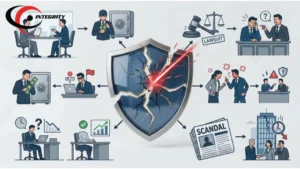
Fake Reference Letter, Warning Signs, and How to Identify It

A fake reference letter is a document that misrepresents a candidate’s work history, often through forged stamps, invented contacts, or a letter written by someone who never supervised the applicant. Employers who know the warning signs and verify references directly with the issuing organization can significantly reduce hiring risk.
What Is a Fake Reference Letter?
A fake reference letter is a recommendation or employment reference that has been fabricated, altered, or obtained through deception. It may be a counterfeit document presented as a genuine letter from a former employer, or a letter written by a friend or relative posing as a supervisor.
In Indonesia, the practice has grown alongside the counterfeiting of educational certificates. Some service providers openly advertise the production of reference letters on social media and even on web pages associated with educational institutions, offering documents designed to look like genuine letters.
Other fabrications are less obvious. A candidate may ask a real former colleague to provide a verbal reference for a role that was never held, or may present a letter from a genuine employer that has been altered to change the job title or employment period.
Warning Signs of a Fake Employment Reference Letter
Recruiters should review reference letters with a critical eye. Individually, one anomaly may have an innocent explanation; several together warrant independent verification before any hiring decision is made.
Faded, Dry, or Uneven Company Stamps
Genuine company stamps are usually sharp, evenly inked, and consistent in size and position. Stamps that look faded, dry, smudged, or unevenly pressed may indicate that a stamp has been photocopied, digitally pasted, or hand-drawn. Compare the stamp against any other official documents the candidate has provided from the same organization.
Incomplete Letterheads or Blurry Company Logos
An authentic letter normally carries a complete letterhead with the company name, registered address, contact details, and a clear logo. Missing elements, misaligned text, or a blurry logo suggest the document may have been copied from a low-quality source or assembled from an online template. Check whether the logo and address match the organization’s official website.
Invalid Reference Numbers and Signatory Details
Many organizations issue letters with sequential reference or document numbers. A missing number, an inconsistent format, or a number that does not correspond to the company’s correspondence style should be questioned. Also verify the signatory’s full name, title, and tenure: a signatory who had already left the organization at the letter’s stated date is a strong warning sign.
This is a general check rather than a guaranteed test, but discrepancies in numbering and signatory details are among the most useful points to confirm with the issuing company.
Job Titles That Do Not Match Employment History and Overly Exaggerated Testimonials
Compare the job title and responsibilities in the letter with the candidate’s resume, application form, and any other records. A title that does not exist in the organization’s structure, or a role that differs from the one the candidate has described, needs clarification.
Letters that praise the candidate in extreme, generic terms without specific examples can also be a warning sign. Genuine references tend to describe concrete responsibilities, duration of service, and observable performance rather than superlatives.
Unverifiable Reference Contact Information
A reference contact that is only a personal mobile number, a free email address rather than a corporate domain, or a number that cannot be found in the company’s official directory should not be accepted at face value. Always locate the organization’s main switchboard through its official website and call it independently. Do not rely on contact details supplied by the candidate, because the candidate may control the line that answers.
Why Do Candidates Forge Employment Reference Letters?
Understanding the motives behind falsification helps recruiters know where to focus their checks. Two common reasons appear repeatedly in practice.
Exaggerating Previous Job Titles on Their Resumes
Some candidates overstate their last position, such as presenting a staff role as a managerial one. Because supporting documents are expected to match the resume, they may then provide a reference letter that confirms the inflated title. Verifying the title with the employer, rather than only reading the letter, exposes this pattern.
Failing to Follow Proper Resignation Procedures
In some cases, employees leave without completing the required exit procedures. An employer may then decline to issue a reference or separation letter. The employee, however, may still need such a letter to withdraw insurance and social security funds (BPJS) or to support a new job application. This pressure can lead some individuals to seek a fabricated document instead of resolving the matter with the former employer.
Examples of Fake Employment Letters vs. Genuine Documents
Comparing a suspect document with a genuine one from the same organization is one of the most practical verification methods. Recruiters who have seen authentic letters from a particular company are better placed to notice differences.
Examples of Fake Letter
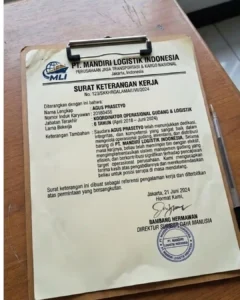
Key Differences Between Genuine and Fake Employment Certificates
Genuine employment certificates usually follow a consistent format, carry verifiable details such as employment dates and position, and are issued by Human Resources or an authorized officer. Fake certificates often show inconsistent fonts, vague dates, unexplained gaps in the role description, or signatures that do not match other records from the same company. A general rule is that any detail that cannot be confirmed with the issuer should be treated as unverified.
Warning Signs of Fake Job Interview Invitation Letters
Candidates may also forge invitation letters to support claims of prior interviews or offers. Warning signs include an invitation from a generic email address, a date or venue that cannot be confirmed, a signatory who does not appear on the company’s website, or a letter that uses unusual or pressuring language. As with reference letters, confirm the invitation by contacting the company through its official channels.
Legal Risks of Forging Employment Documents
Creating or using a falsified employment document can expose the person involved to criminal liability. Employers, too, should understand the legal context when they respond to suspected forgery, so that verification and any subsequent action remain proportionate and lawful.
Document Forgery Under Article 263 of the Indonesian Criminal Code (KUHP)
In general, Article 263 of the Indonesian Criminal Code (KUHP) addresses the making of a false letter or the falsification of a letter with intent to use it as genuine, where the use could cause harm. A forged reference or employment letter presented to a prospective employer may fall within this general framework. Whether a specific case meets the legal elements should be assessed by qualified legal counsel.
Fraud Under Article 492 of Indonesia’s New Criminal Code and the National Education System Law
Article 492 of Law No. 1 of 2023, which succeeds Article 378 of the former Criminal Code (KUHP), generally covers fraud in which a person seeks to unlawfully benefit themselves or someone else through deception, such as using a false name or position or telling a series of lies. Authorities may apply this provision to a candidate who uses a fake reference letter to secure a job, depending on the facts. The National Education System Law may also apply if a candidate submits falsified educational documents. This section offers general information only, so consult the current legal texts and a qualified legal professional for any specific matter.
How to Verify an Applicant’s Employment Certificate
Verification should rely on independent sources rather than documents or contacts supplied by the candidate. Combining direct confirmation with professional screening provides the most reliable result.
Contacting Previous Employers Directly for Verification
Find the previous employer’s official switchboard or HR department through its public website and contact them independently. Confirm the candidate’s employment dates, job title, and the authenticity of any letter issued. Ask specific questions about the role and responsibilities, and request that the response be confirmed in writing through official channels. Avoid accepting verification from any number or email that the candidate has provided.
The Role of Reference Checks and Professional Third-Party Verification Services
A reference check can substantiate a candidate’s information and provide insight into their skills, work performance, and behavior. Because thorough checks take considerable time and resources, and because the results require careful judgment, many employers choose to outsource this task to a specialist third party. Integrity has supported employment screening, including reference checks, for more than 17 years, which can help organizations reduce the operational burden and the risk of relying on unverified information.
How Companies Can Prevent Employment Document Forgery
Prevention works best when verification becomes a standard part of recruitment rather than a response to a single suspicion. Clear procedures, consistent documentation requirements, and staff awareness all contribute to reducing the likelihood of accepting falsified files.
Using QR Codes, Watermarks, and Digital Signatures
Where a former employer offers document-verification features, such as QR codes, watermarks, or digital signatures, these can be used to confirm that a letter was issued by the organization. Verification should still be completed through the issuer’s official channel, since a QR code or watermark can itself be copied. Treat such features as one layer of a broader verification process.
Building Awareness of Recruitment Fraud Involving Fake Documents
HR teams and hiring managers need proper training to spot a fake reference letter and other forged documents, and they should escalate suspicious files rather than dismiss them. When recruitment teams share examples of common warning signs and follow a clear internal reporting process, they can investigate red flags consistently and treat every candidate fairly.
Trusted Employee Background Check Company
A fake reference letter is a clear sign that companies need structured verification before hiring a candidate. By examining the document for red flags, confirming its details with the relevant sources, and conducting professional reference checks, companies can reduce their hiring risks.
Integrity is a background check company in Indonesia with more than 20 years of experience across Asia and Europe. As the first company in Southeast Asia to be PBSA-accredited, Integrity helps you thoroughly verify candidate information. Discuss your needs with Integrity Indonesia today.